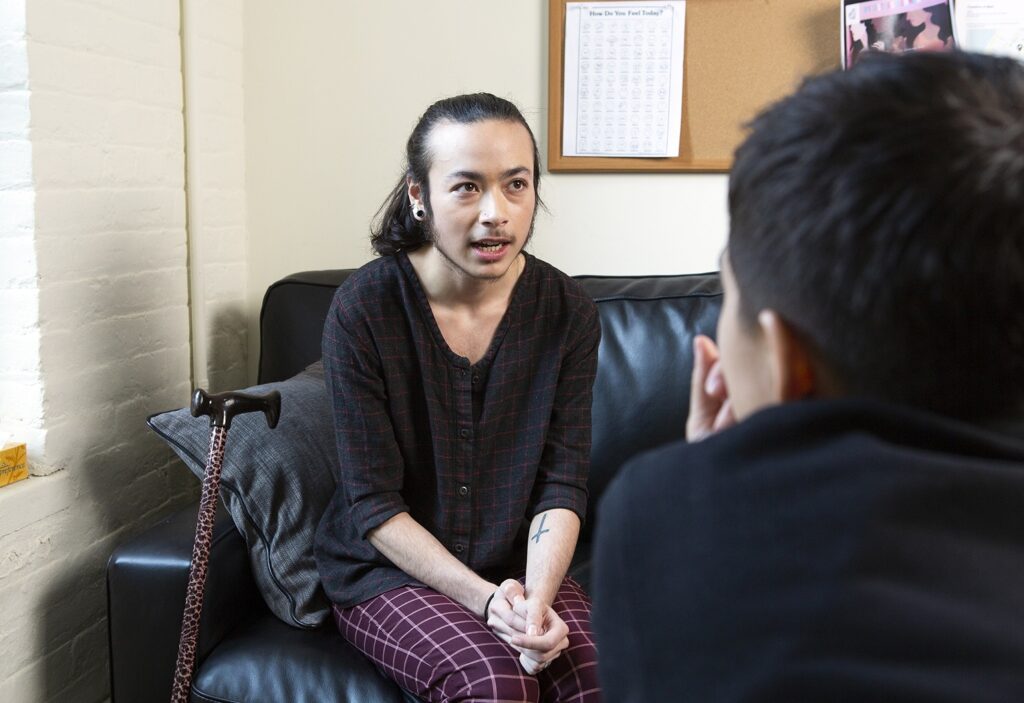
Not every trans person needs psychosocial support; it is advised to ask the trans person if they desire this care and make appropriate referrals on a case-by-case basis.
Counselling and assessments should preferably take place within a specialised setting especially if surgical interventions are desired.
The need for support may not be directly related to their gender identity and may be linked to experiences of violence, discrimination, rejection or fears of such.
Partners, children and parents of a trans persons may also need psychological or social work support. Access to this support should not be dependent on the trans person themselves.
Not all trans people identify themselves as ‘male’ or ‘female’. A considerable proportion of trans people identify themselves as gender variant, genderqueer, non-binary, third gender, or otherwise, and therefore fall outside the binary gender categories of men or women.
Children from 3 to 5 years old already have a fairly good idea of what being a boy and/or girl means. It is important to recognise their gender identity, which does not mean they are ‘suffering’ if this is incongruent with their sex assigned at birth (often described using the pathologising language of “gender dysphoria”). It does not necessarily mean that they will choose a medical transition later. It is advisable to contact specialised care at the right time (before puberty). Children can be referred to the Gender Wellbeing Clinic.
Trans people can have autism or mental health conditions, just as cisgender people; in these situations, it is important to ensure non-discriminatory access to transition-related medical care and to develop a patient-centered plan.