Children learn about gender very early and through various channels. Most children and adolescents clearly know their own gender identity (i.e. they feel like a boy, a girl, or another gender). Similarly, society accepts their gender expression (i.e. how they express and communicate their gender outwardly) when their expression aligns with social norms for the gender they were assigned at birth. However, there are also children whose gender expressions do not align with these stereotypical gender role expectations. If the child is insistent, persistent and consistent in claiming a gender identity which is different to the gender assigned at birth it is advisable to seek professional help. Children who show gender nonconforming behaviours, may or may not be trans. Some childrens roles may fall out of the social expectations and be cis, while some others may show these behaviours and be trans. It is also a common misconception that all trans children present this behaviour, but that is not the case. Some children who are trans fit gender norms, either because they do not dare to express themselves the way they would like to, or because that is just who they are. Gender nonconforming behaviour should not be seen as a sign of someone being trans. It should be something to pay attention to, especially considering the high rates of bullying and social rejection they usually face and the impact it has on them.
They should always be respected and supported in their needs, gender expression, role and the identity they verbalise (e.g. the clothes they want to wear, the name or pronouns they need to use). Children should be educated about the diversity of genders, so they can have the necessary information to express themselves. Given the very rigid gender stereotypes in today’s society, children are very aware of what is socially acceptable or not. They know what behaviours may trigger a negative response by their environment. Their support systems should positively reinforce them to compensate for all of those internalised messages so that children feel safe enough to be themselves. Any attempt at questioning, censoring or disapproving will reinforce the already existing negative message society is already sending to them.
Psychological support
Psychological support for gendervariant children and adolescents is not aimed at predicting whether or not gender non-conforming feelings and behaviour will disappear, but rather at exploring gender identity and finding a balance between interests, expressions and identity and increasing resilience to deal with possible stress factors from their environment. When guidance is started, it will not only focus on the questioning individual. The rest of the family and the social environment also deserve attention. Parents and siblings can also benefit from psycho-social and/or psychiatric counselling and support. They are usually the ones who need the most support to adjust expectations, accept and learn how to best support the trans child.
For some children the gender non-conforming behaviour and feelings cease when they reach puberty. Seeking support from a counsellor who specialises in gender variance in children and young people does not necessarily mean that the child will undergo a social or legal transition and/or medical interventions in the future. Instead it ensures that the child will have enough support and information to explore their feelings in healthy ways, and, with time, determine the best path for themselves. It is advisable to start counseling at a young age to be able to explore all treatment options.
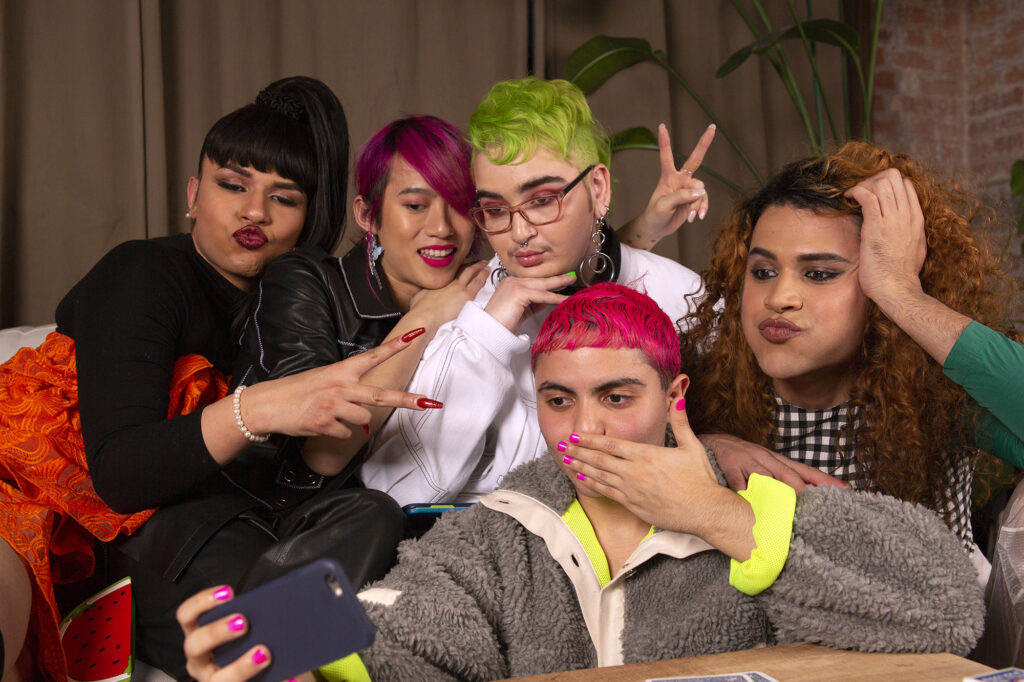
Photo: The Gender Spectrum Collection
The Gender Wellbeing Clinic
Malta depathologised gender identity in 2016 and therefore trans identities are no longer considered to be medical or mental health conditions although this should not prevent trans persons from accessing any gender affirming medical interventions. However, everyone agrees that gender nonconforming children and their parents often need and benefit from support and guidance due to the frequent lack of information, myths and social discrimination. Only after the onset of puberty can a hormonal treatment be started. Guidance on this can be obtained through the Gender Wellbeing Clinic which works in close collaboration with the paediatric endocrinologist. Before the onset of puberty, the help consists mainly of psycho-social support and guiding the child/adolescent and parents in dealing with the gender variant feelings and the difficulties and challenges that this might give rise to.
Children aged 16 and 17 can access the Gender Wellbeing Clinic independently and although parental support is helpful, parental consent is not legally required to access Gender Wellbeing Clinic services.
A multi-disciplinary team of health professionals can help to guide the child/young person to decide which course of action might be best for them. You can find more information about the treatment and support provided by the Gender Wellbeing Clinic here.